//

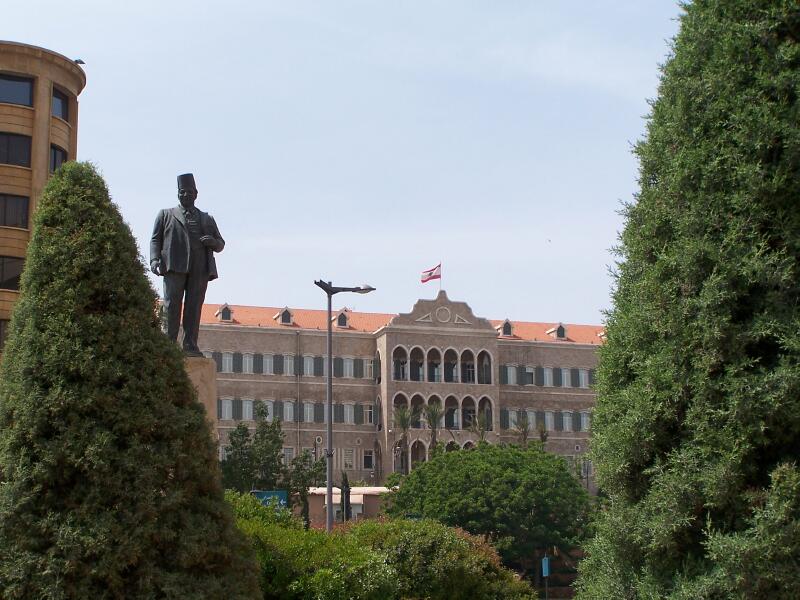
Photo: User:BlingBling10, CC BY-SA 3.0 via Wikimedia Commons
Constructed in 1853 as an Ottoman military barracks, this building was the headquarters of the French governor during the French Mandate. After Lebanon’s Independence, it became the site of affairs for the prime minister. Adjacent to it is the Hamidiyyeh Clock Tower. Just a place to walk by.
The Grand Serail is the headquarters of the Prime Minister of Lebanon. It is situated atop a hill in downtown Beirut a few blocks away from the Lebanese Parliament building. The Grand Serail is a historic building, the most important of three Ottoman monuments on the Serail Hill, the others being the Council for Development and Reconstruction and the Hamidiyyeh clock tower.
© OpenStreetMap contributors
Behind Bank Street are remains of the Roman Bath which once served the city’s population. It was discovered in 1968-69, and underwent a thorough cleaning and further excavation in 1995-1997.
Army road, Zokak el Blat, Private historic art museum that includes ancient books, pottery, carpets, religious icons, antiques, jewelry.
Until the civil war in Lebanon this Greek-Orthodox church, built in 1767, was the oldest functioning church in Beirut. The decorations on its walls were lost during the war. The cathedral has been restored.
Emir Bechir Street, Downtown Beirut. Built in 1888, the style of this church is neo-classical. The cathedral was completely restored in 2000.