Money and payments
Cards and cash
Credit/debit cards are widely accepted, but keep cash just in case
Tipping
In Kosovo generally tipping is not expected from locals, but as it is done by foreigners, it is welcome.


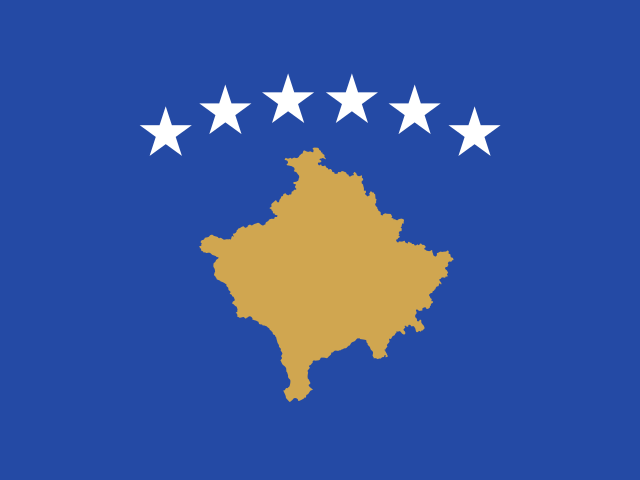 Europe · Southeast EuropeUsable guide
Country in Southeastern Europe
Photo: qiv, CC BY-SA 2.0 via Wikimedia Commons
Kosovo (Albanian: Kosova (definite form) or Kosovë (indefinite form) is a largely mountainous country in the Balkan region of Europe. Its attractions for travelers include its archaeological and religious heritage, natural beauty, hiking and skiing. Kosovo has Ottoman, Christian Orthodox and modernist heritage to share with the world. Being still new to tourists, Kosovars are welcoming to foreign visitors and happy to help. Kosovo declared its independence from Serbia in 2008, which still opposes the act.
Answers to what travellers most often look up about Kosovo.
Cards and cash
Credit/debit cards are widely accepted, but keep cash just in case
Tipping
In Kosovo generally tipping is not expected from locals, but as it is done by foreigners, it is welcome.
Albanian, Serbian
Most people in Kosovo speak Albanian, while in Serb-majority areas, such as the north, Serbian is spoken - both are official languages and appear on road signs, etc.
You can buy a local SIM card for €3, with the two major carriers being Vala and Ipko.
Mobile networks
Tap water in cities is safe and drinkable.
Foreigners can receive medical treatment at the public hospital in Pristina, where staff from your accommodation may be useful as translators to help with communication during your visit.
Attractions, food, stays and travel essentials, with ratings, reviews, opening hours and directions.

the capital of Kosovo.

Podujeva is a town in northern Kosovo, 40 mins north of Pristina.

its Old Bazaar has a mosque that was built in the 15th century. It is one of the rarest of its kind

Juniku (Serbian: Јуник, Junik) is a municipality and small town in western Kosovo, located in the Gjakova region. It lies in the western part of Kosovo.

visitors come to see the Mirusha Waterfalls

host to a UNESCO World Heritage Site, and surrounded by stunning nature

the historical and cultural capital of Kosovo. Charming city bustling with various festivals and architecture of different periods.
known for its scenic landscapes, rich cultural heritage, and warm hospitality

Mitrovica or Mitrovicë is a city in northern Kosovo, ethnically divided between a southern ethnic-Albanian part and a northern ethnic-Serbian part along the Ibër (Ibar) river. It is known for the Mitrovica Bridge which has become a symbol of the divide between Albanians and Serbs.

Ferizaj is a town in Kosovo, just west of the main highway linking the national capital, Pristina, with the Macedonian border.

Gjilan is a town in Kosovo, in the southeast linked with the highway of Pristina, Serbian Border and North Macedonian Border.
Kaçanik/Kačanik, or Kaçaniku, in Kosovo, is a city of peace and quiet, its houses with pointed red roofs being scattered along the verdant mountain slopes. Kaçanik is the first major Kosovar town en route when coming from North Macedonia, except for the border village of Hani i Elezit/Elez Han.

Kamenica or Dardana, or Kosovska Kamenica, is a town and municipality located in the Gjilan District of Kosovo.

Novo Brdo is a town in the Gjilani district of eastern Kosovo.
Viti (Albanian: Vitia) is a city located in the Gjilan region of Kosovo.
The Rugova Mountains are in the north-western part of Kosovo. It is a region within Bjeshkët e Nemuna (the Cursed Mountains), also known as the Albanian Alps or the Accursed Mountains.

Gračanica is a Serbian community in Kosovo, centered around the Gračanica Monastery and about 10 km from Pristina. Since the end of conflict, this town has functioned as a center for the remaining Serbian community in Kosovo.

a largely rural region known for vineyards and wine-making

a ski centre

Prevalla (Serbian Prevalc) is a ski resort and village which approximately is 30 km away from Prizren, Kosovo and about twelve kilometers from Brezovica, the largest ski center in Kosovo.

Brod is a village in Kosovo.
Contains the capital Pristina, which has a lively centre with bustling cafes and bars, galleries and museums, the "Newborn" independence monument and the Germia National Park right on the edge of the city. Cultural events are hosted here year-round and it has regular transport links to towns and cities throughout Kosovo. Outside of the city, lies the town of Gračanica with its 14th-century Serbian Orthodox monastery and nearby Ulpiana archaeological site. The region also includes two monuments to the Battle of Kosovo in 1389, a tower at Gazimestan and the Tomb of Sultan Murad I.
The west is Kosovo's most scenic region and has a rich cultural heritage. Its two biggest cities are Peja, with its scenic location and 13th-century UNESCO-protected Patriarchate, and Gjakova with its Ottoman old town restored in the 21st century. Behind Peja lies the dramatic Rugova Gorge, a national park and playground for outdoor activities, while east of Gjakova is wine-making country, with vineyards surrounding the town of Rahovec. Serbian heritage can be explored in the medieval village of Velika Hoca, where rakija (brandy) is still made in the traditional way, and the Visoki Decani monastery with its 14th-century original frescoes. Two sets of waterfalls in the west can offer a refreshing getaway, including Mirusha on the road from Prishtina to Gjakova and Radavc, between Peja and Montenegro, where the source of the White Drin River can be found.
The city of Prizren lies at the heart of southern Kosovo, with its historic old town, hilltop castle, and impressive array of mosques and churches. South of Prizren is the remote mountainous area of Dragash, home to one of the Balkans' most picturesque villages, Brod. The Sharri mountains stretch across Kosovo's southern border, and offer ample opportunities for hiking and skiing, on the slopes of Brezovica.
At the centre of the northern region is the city of Mitrovica, with its mixed Albanian and Serb population divided by the River Ibar. Nearby is the town of Vushtrri, the oldest settlement in Kosovo that has a centuries old castle and stone bridge. At Prekaz, close to Skanderaj, visitors can get a glimpse into Kosovo's more recent history, at a monument to the Jashari family, whose massacre in 1998 is often seen as the trigger to the escalation of violence at the end of the 20th century. Opportunities for hiking are provided by rural regions in the north, including in Shala e Bajgores east of Mitrovica and around the lake outside of Zubin Potok.
The rolling hills of Kosovo's southeast are home to the bustling city of Gjilan, a medieval fortress at Novo Brdo and the church where Mother Theresa received her calling at Letnica. On the road from Prishtina to Skopje lie the cities of Ferizaj and Kacanik, with their murals and post-industrial heritage, and a chance to explore the Gadime caves.
Public transport and paid services in Kosovo.
By train
The only connections as of May 2026 are two daily trains from Pristina to Peja which are a comfortable way to make this journey (€3).
By car
Major highway construction throughout the 2010s has significantly reduced car travel times between major cities, and further road building and improvements are underway.
By taxi
It is best to use registered taxis as they have fixed prices and are metered. Registered taxis are clearly marked with a company name and phone number printed on the vehicle.
By ride sharing
Udhë is trying to establish something like BlaBlaCar for Kosovo. The offers are sparse, mostly covering Pristina-Prizren.
Apps for booking a taxi or a ride in Kosovo.
Finding apps for Kosovo…
Other ways to travel:By thumb
Choose an airport to see hotels, stations, taxi ranks and car rental desks around it.
Prishtina · International · PRN
Loading places around the airport…
Calculated from climate averages: mild daytime highs and lower rainfall. It does not account for festivals, crowds or prices.
Average conditions in Pristina
| Jan | Feb | Mar | Apr | May | Jun | Jul | Aug | Sep | Oct | Nov | Dec | |
|---|---|---|---|---|---|---|---|---|---|---|---|---|
| Avg. high | 3° | 5° | 10° | 15° | 20° | 25° | 29° | 30° | 23° | 17° | 11° | 4° |
| Avg. low | -5° | -4° | 0° | 4° | 9° | 13° | 16° | 16° | 11° | 6° | 1° | -3° |
| Rainfall (mm) | 87 | 80 | 88 | 77 | 90 | 73 | 52 | 51 | 80 | 96 | 109 | 96 |
| Humidity | 90% | 87% | 82% | 77% | 75% | 68% | 55% | 52% | 61% | 73% | 83% | 88% |
Choose your passport and destination to see whether you need a visa.
We do not label countries as safe or unsafe. Below is the official advice from two governments, with the date it was last updated. Always read the full advice before you travel.
US Department of State
Level 2 of 4Exercise increased caution
Exercise increased cautionin Kosovo due to unrest and terrorism. Unrest Demonstrations related to the local political situation may occur with little notice. They may disrupt transportation and other essential services. Terrorism There is risk of terrorist violence, including terrorist attacks and other activity in the Balkans region, including Kosovo. Visit the U.S. Department of State's Kosovo country reports on terrorism to learn more. Reconsider travel to North Kosovo area due to risk of unrest.
UK Foreign, Commonwealth & Development Office
No advice against travel. Read the full advice before you go.
Large gatherings in Pristina and other urban centres Large gatherings are taking place, including in Pristina in the evenings. This could lead to some disruption, including to traffic and public transport. Keep up to date with local developments, allow extra time for travel, and stay away from any large crowds or demonstrations. Before you travel No travel can be guaranteed safe. Read all the advice in this guide. You may also find it helpful to: see general advice for women travellers read our guide on disability and travel abroad see general advice for LGBT+ travellers read about safety for solo and independent travel see advice on volunteering and adventure travel abroad Travel insurance If you choose to travel, research your destinations and get appropriate travel insurance. Insurance should cover your itinerary, planned activities and expenses in an emergency. About FCDO travel advice FCDO provides advice about risks of travel to help you make informed decisions. Find out more about FCDO travel advice. Get travel advice updates Sign up to get email notifications when this advice is updated. Follow FCDO: travel advice on X travel advice on Facebook Travel Aware on Instagram
Stories, itineraries and practical advice for travelling in Kosovo.
 Nature & adventure
Hiking and mountains have started to become an asset for tourism in Kosovo. Kosovo has an almost century-long mountaineering tradition.
Wikivoyage
 Travel tips
Paragliding and related activities are quite developed in Kosovo with many clubs started after the war. Kosovo has limited use of the airspace for sports aviation after the war, with paragliding being an exception.
Wikivoyage
 Nature & adventure
Kosovo has a mountainous relief suitable for winter sports activities. Key skiing destinations are Brezovica and Brod in the Sharr Mountains in the South and Bogë in Rugova in the north.
Wikivoyage
 Itineraries
The Brotherhood and Unity Highway (Croatian: Autocesta "Bratstvo i jedinstvo"; Macedonian: Автопат „Братство и единство“; Slovene: Cesta bratstva in enotnosti or Avtocesta bratstva in enotnosti, Serbian: Autoput…
Wikivoyage
 Itineraries
Peaks of the Balkans is a 192-km circular hiking trail through the remote Accursed Mountains of Albania, Kosovo, and Montenegro.
Wikivoyage
 Culture & history
The Ottoman Empire, also known metonymically as the Sublime Porte, and especially in the 19th and 20th centuries as the Turkish Empire, was one of the great empires of the Old World, from the 14th to the early 20th…
Wikivoyage
Every section of the guide. Open one to read it in full.
