//

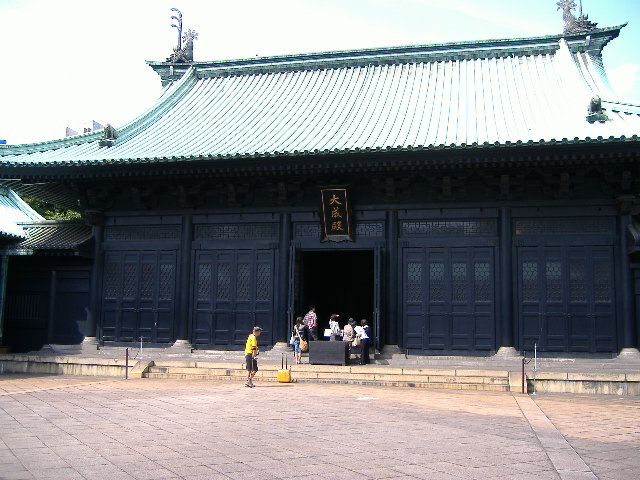
A temple of Confucius.
Yushima Seidō , is a Confucian temple in Yushima, Bunkyō, Tokyo, Japan. It was established in the late 17th century, during the Genroku era of the Edo period. Towards the late Edo period, one of the most important educational institutions of the shogunate, the Shōhei-zaka Gakumonjo (昌平坂学問所)), or Shōheikō , was founded on its grounds.
© OpenStreetMap contributors
聖橋
On the Kanda river (神田川), on the border between Bunkyō and Chiyoda wards. It offers one of the best spots in Tokyo to see trains, three lines crossing each other (on the west, so better seen in the afternoon). Akihabara district in 500 m/10 min away to the east. Its name means Saints bridge. One side at Temple of Confucius Yushima Seido (湯島聖堂), the other side at cathedral of the Japanese Orthodox Church St. Nicholas Church (ニコライ堂, Nikorai do).
野球殿堂博物館
An attractions complex featuring a large indoor stadium, an amusement park, bowling alley, off-track betting center, and the LaQua shopping mall/spa (see Buy). Tokyo Dome is one of several Tokyo stadiums. It is home to the Yomiuri Giants baseball team and also hosts concerts, trade show events, and professional sports. Attached by a walkway is Korakuen Hall, a hub for Japanese martial arts and professional wrestling events held almost daily.
文京シビックセンター bunkyō shibikku sentaa
The lavish government building for the Bunkyo ward of Tokyo, once described in the Japan Times as "a colossal Pez candy dispenser." A free observation deck on the 25th floor, jutting out of the top like the Starship Enterprise, commands a fine view of much of Tokyo.
小石川後楽園
Laid out in the 17th century, this splendid traditional garden boasts a large collection of trees and flowering plants that provide touches of beauty all year round. Winding paths, wooded hills, ponds teeming with ducks and fish. The place can be a little crowded at certain times of year (such as during the cherry blossom season in late March-mid April), but there's plenty of room for everyone.