//

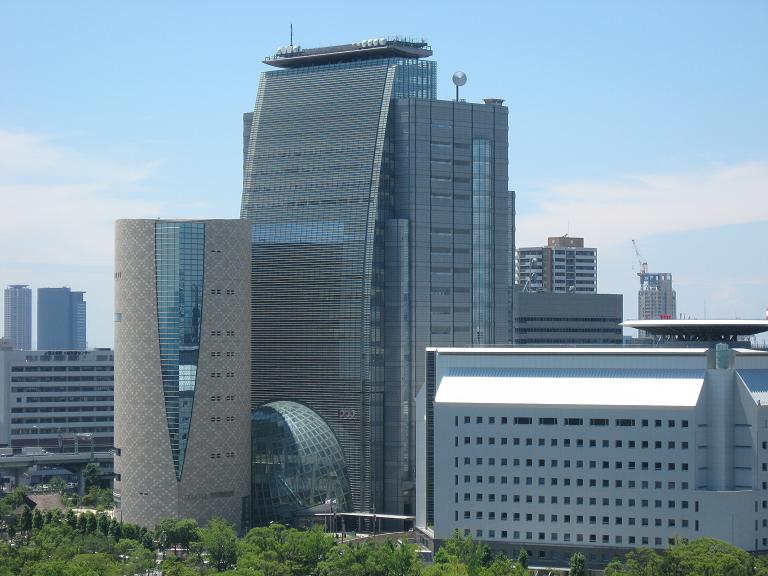
Photo: User: (WT-shared) Onyo at wts wikivoyage, CC BY-SA 4.0 via Wikimedia Commons
An ideal place to learn all-abouts of Osaka's history. Enjoyable view over Osaka Castle and the OBP skyscrapers.
Osaka Museum of History opened in Chūō-ku, Ōsaka, Japan, in 2001. The project architects were César Pelli & Associates and Nihon Sekkei. It is adjoined by an atrium to the NHK Osaka Broadcasting Center, which was designed by the same architects and built at the same time. The former Osaka City Museum closed earlier the same year. Over four floors, the displays tell the history of the city from the time of the Former Naniwa Palace, located in the area now occupied by the museum. Remains of a warehouse, walls, and water supply facilities for the palace are also on view in the basement. In 2005, the collection numbered some 100,000 objects. By 2016, it had grown to 138,595 objects, while a further 17,632 items were on deposit at the museum.
© OpenStreetMap contributors
大阪城 Osaka-jō
Osaka's best known sight, although it's a concrete reconstruction that pales in comparison with, say, Himeji. Think of it as a museum built in the shape of a castle, rather than as an historical Japanese castle, as the interior consists of several gloomy modern galleries rather than a real reconstruction. Still, it's pretty enough from the outside, especially in the cherry blossom season when Osakans flock to the castle park to picnic and make merry. Naniwa Palace Site Park or Naniwanomiya can also be found south to Osaka Castle Park (although it's one of Japan's oldest habitats and palace sites, today it's little more than an empty grass field where the outlines of Naniwa's palace foundations from around 643 AD have been partly recreated in concrete).
大阪国際平和センター
A museum dedicated to the promotion of peace through displays of war. Because it is an Osaka museum, it largely focuses on the effects of the bombings on Osaka in World War II. In the past, the museum also had exhibitions depicting the atrocities committed by Japan against China, Korea, and Southeast Asia. Sadly, however, those exhibitions were permanently removed in 2015 in response to pressure from conservative political groups. Exhibits have English explanations.
国立文楽劇場 (Kokuritsu Bunraku Gekijō)
One of the last places in the world where bunraku, a form of intricate puppet theater from the Edo period, can be seen live. The large puppets, which require three operators each, are accompanied by traditional music and narration, and act out great Japanese plays of the 1600s and 1700s. Transcripts in Japanese and synopses in English are provided.