//

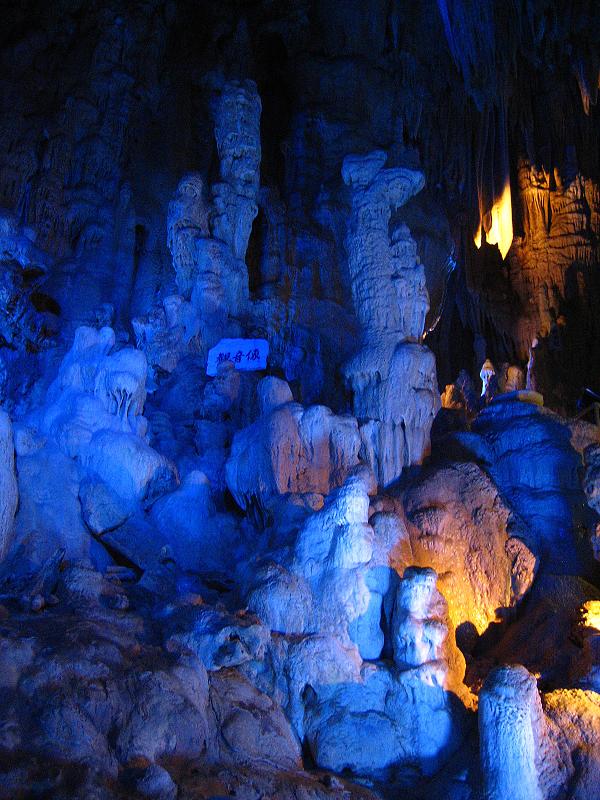
Photo: Brian Adler 09:29, 17 June 2007 (UTC), Public domain via Wikimedia Commons
An 80 million-year-old, 3,000-meter-long limestone cave discovered in 1969. Traversing the 600 meters open to the public will take about an hour. This is a developed cave for tourism, so there are footpaths, lighting, handrails, and information signs. At the same time, the mix of small passages to huge grand hall cavern, and large variety of rock formations not found elsewhere in Japan, will satisfy all but the most picky cave enthusiasts. If you are looking for more adventure, for a small fee you can try the exploration course. Expect to squeeze through a few tight areas, but it is certainly a lot of fun!
Abukuma-dō is a limestone cave located in Fukushima Prefecture, Japan.The cave was discovered on August 15, 1969, northeast of the city of Tamura and was originally named Kamayama Shonyu-do (釜山鍾乳洞). It was designated a natural heritage of the town on February 7, 1971, and renamed Abukuma-dō on June 1,1973. Visitors can traverse a 600-metre-long path inside the cave as well as a 120-metre-long exploration course to view the stalactites and stalagmites. Each stalactite has taken more than eighty million years to form. Beyond the public areas lie about 2,500 metres of cave that are not open to the public. Nearby Abukuma Cave is the smaller Irimizu Shonyu-do, discovered in 1927. Irimizu Limestone Cave was designated a National Natural Treasure on December 28, 1934. The temperature inside Abukuma-dō is approximately 15 °C and the humidity is above 90%.
© OpenStreetMap contributors
The Tadami Line is a scenic railway in western Fukushima and neighbouring Niigata Prefecture, winding through remote mountain valleys, forests and riverside villages. Its bridges over the Tadami River are particularly famous for their spectacular views, especially during autumn foliage and winter snow.
鶴ヶ城 Tsurugajō
Built in 1384, this was the site of one of the last battles of the Boshin War between samurai fighting for the shogunate and new government forces formed during the Meiji Restoration of 1868. While the castle is a concrete reconstruction (there are very few original castles left in Japan), it remains an impressive attraction thanks to its large scale, unique red roof, and natural and historical surroundings. It is considered one of the best places to learn about samurai history and culture in Japan.