//

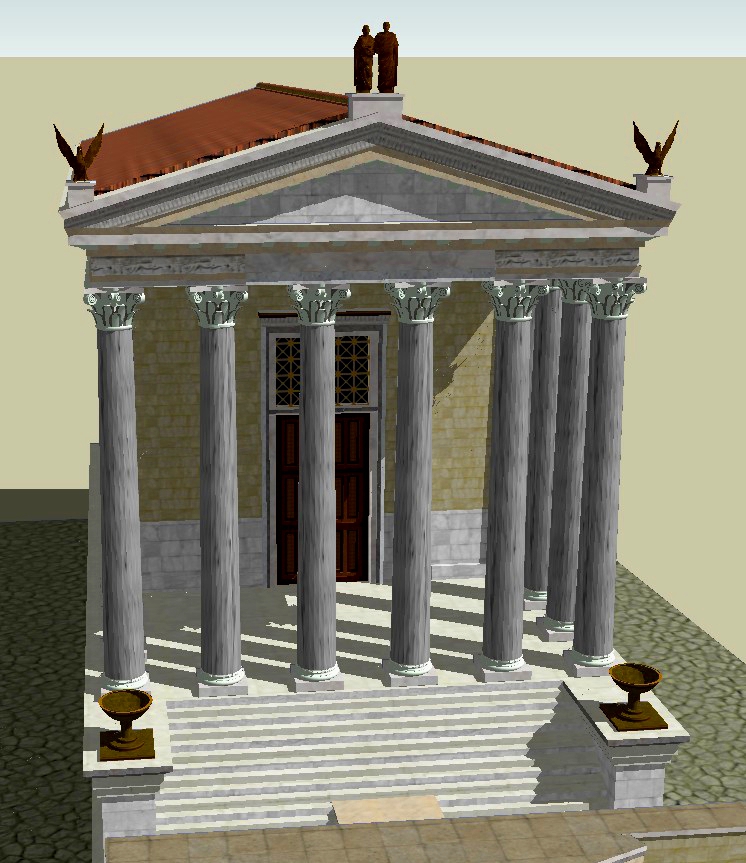
Photo: Lasha Tskhondia (L.VII.C), CC BY-SA 3.0 via Wikimedia Commons
Built in 141 AD and dedicated to the Empress Faustina; after her husband emperor Antoninus Pius died in 161 AD the temple was rededicated to the couple.
The Temple of Antoninus and Faustina was an ancient Roman temple in Rome, which was later converted into a Roman Catholic church, San Lorenzo in Miranda. It is located in the Forum Romanum, on the Via Sacra, opposite the Regia.
© OpenStreetMap contributors
Tempio di Divo Giulio Cesare
Finished in 29 BC, marks the spot of Caesar's spontaneous cremation and Mark Antony's funeral speech, made famous by Shakespeare in his play Julius Caesar ("Friends, Romans, Countrymen, lend me your ears ...").
Completed in 179 BC.
Foro Romano
If stones could talk: these hallowed ruins were the most powerful seat of government in the world. To stand in the political, legal and religious centre of the whole Roman Empire brings shivers down one's spine. It is the best way of imagining the splendour and glory of ancient Rome. Located in a small valley between the Capitoline and Palatine hills, access to the Forum is by foot only, from an entrance on the Via dei Fori Imperiali. Wheelchair access is available for most of the Forum but be aware that the path is often bumpy due to it containing original stones from the ancient Roman period. The Forum is much less crowded than the Colosseum and, from a historical perspective, much more interesting. You can hire an audioguide for €5.5 from a small booth just above the Arch of Titus near the Colosseum. These audioguides contain an audio jack so that two people can easily share one.
Built in 81 AD by the emperor Domitianus in dedication to his brother Titus, who died earlier that year and reigned as emperor from 79-81, overseeing the opening of the Colosseum in 80 and the eruption of Mt Vesuvius the previous year.
San Pietro in Carcere
Romans and leaders of Rome's defeated enemies were imprisoned here where they either died of starvation or strangulation. According to legend, St. Peter was also imprisoned here.
The remains of the ancient Roman archives, where Cicero and Seneca did research. Visible from the Forum and accessible through the Capitoline Museum.