//


 Asia · Western AsiaOutline guide
Country in West Asia
Photo: Diyar Muhammed, CC BY-SA 4.0 via Wikimedia Commons
Iraq (Arabic: العراق Al-Irāq, Kurdish: عێراق Êraq) is a republic in the Middle East. It has an extremely rich history and culture that is still visible today, although accessing it may pose some challenges to visitors. It was once host to the region of ancient Mesopotamia, often called the "cradle of civilisation". After the rise of Islam, Baghdad became a center of learning and the arts during the Islamic Golden Age. Its holy cities of Najaf and Karbala now accept millions of pilgrims per year from throughout the Middle East.
Answers to what travellers most often look up about Iraq.
Mobile networks
 Korek Telecom
 AsiaCell
It is best to always drink bottled water.
It is not safe for short term visitors to drink the water anywhere in Iraq. It is best to always drink bottled water. It will usually be sold at vendors and large stores, and will be easy to find.
Iraqis are generally humble, hospitable and down-to earth.
Covered in the guide
Attractions, food, stays and travel essentials, with ratings, reviews, opening hours and directions.

Baghdad (Arabic: بـغداد Baġdād) is the capital and largest city of Iraq, with an estimated population of 6-7 million. Once one of the greatest centres of learning and culture in the world, Baghdad was the capital of the Abbasid Caliphate during the Islamic Golden Age.
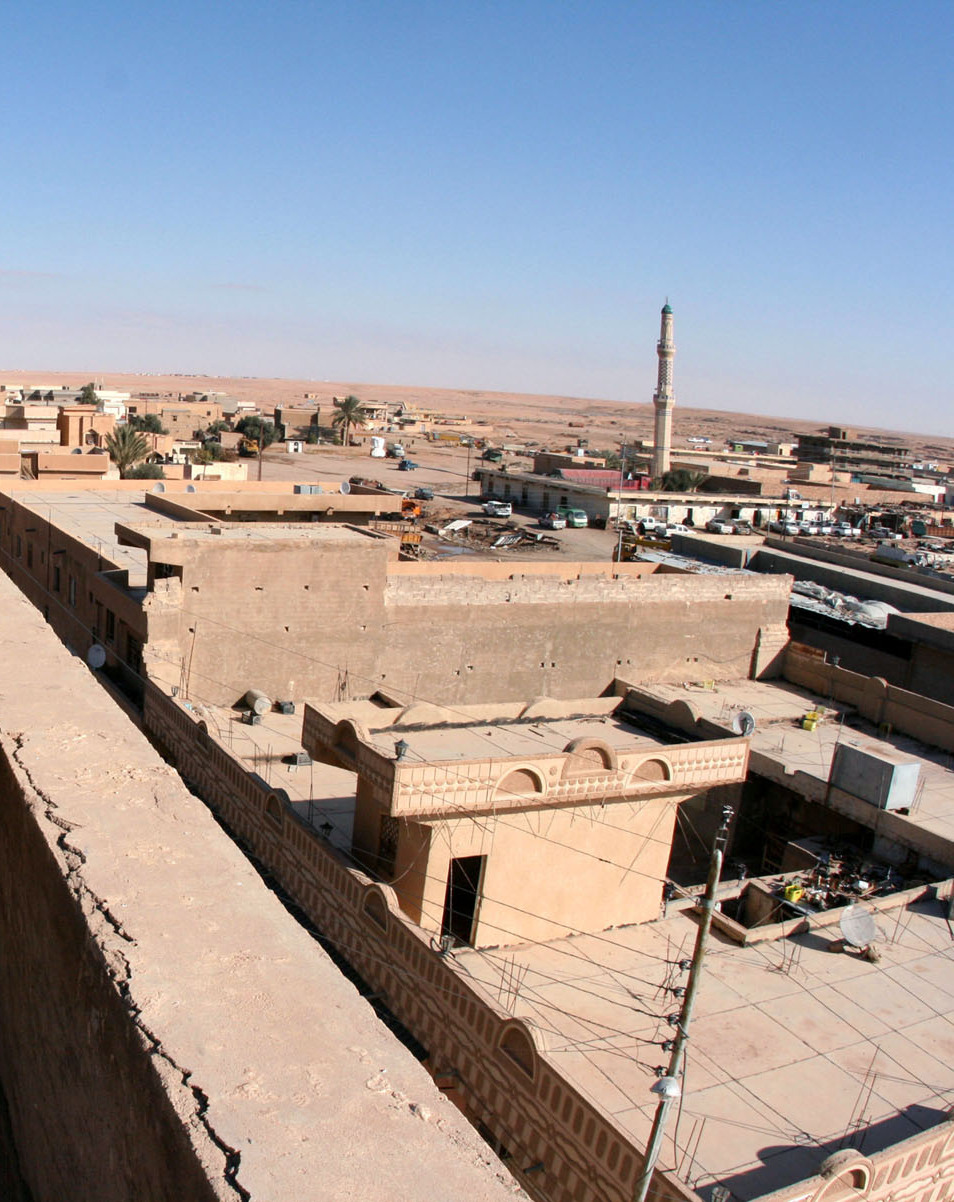
Ar Rutba (Arabic: الرطبة ar-Ruṭba, also Romanized Rutbah) is a city on the high plateau of the Iraqi Desert. With about 30,000 inhabitants, it is the westernmost town of any real size, also described as the most isolated town of any size in Iraq.
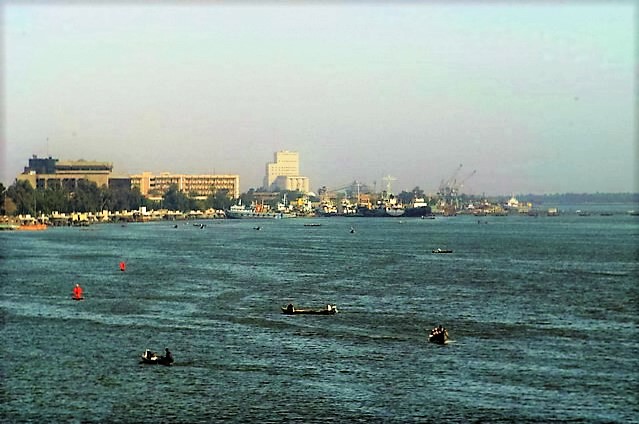
Basra (Arabic: البصرة Al Baṣrah) is a port city in Southern Iraq, close to the border with Kuwait and Iran. It is Iraq's third largest city with a population of 2,150,000 (2017).
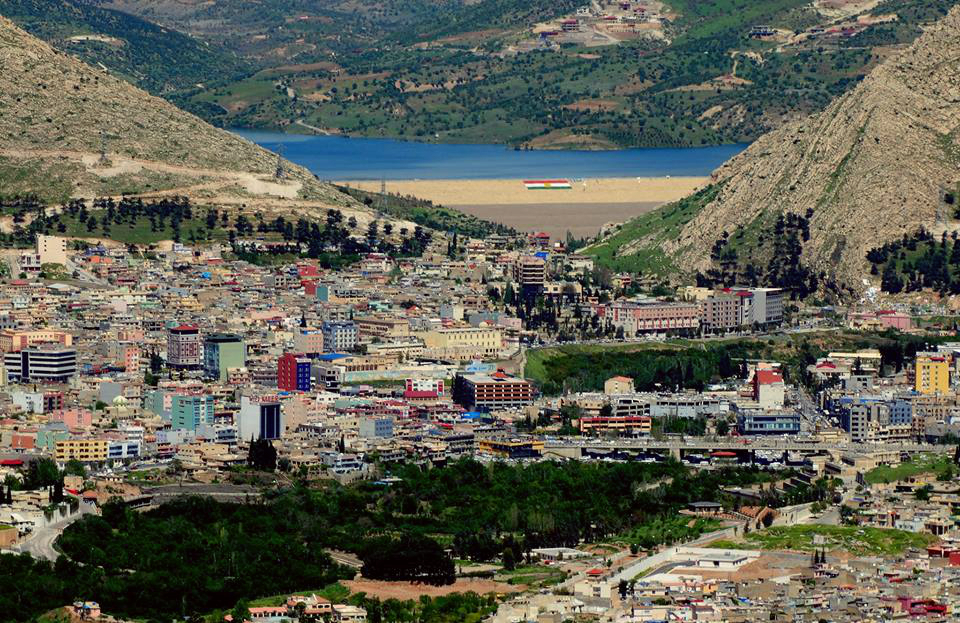
Dahuk (also spelled Duhok or Dohuk; Kurdish: دهۆک, Dihok; Syriac: ܢܘܗܕܪܐ Nūhadrā; Arabic: دهوك Dahūk) is the capital of Duhok Governorate in Iraqi Kurdistan, it is a Kurdish city with a population of approximately 250,000 inhabitants, consisting mostly of Kurds and Assyrians. The city is encircled by mountains along the Tigris River.

Erbil (Hewlêr or هەولێر in Kurdish and also transliterated as Arbil) is the capital and largest city in Iraqi Kurdistan, and the fourth-largest city in Iraq. It is one of the oldest continually-inhabited sites of human civilization, and is also a rapidly-growing and urbanizing center for the oil industry and NGOs in the Middle East.

Fallujah (Arabic: الفلّوجة, Aramaic: Pumbeidtha) is a city in Iraq's Baghdad Belts.

Karbala (Arabic: كربلاء) is a city in Southern Iraq. It is considered one of the holiest cities in the country.
Kirkuk (Kurdish: کەرکووک, Arabic: كركوك, Turkish: Kerkük) is a city in Northwestern Iraq. However, its population is ethnically mixed, and it is under the control of the Iraqi government.

Assur is an ancient Assyrian ruin in Northwestern Iraq. In the Bronze Age, it was an important trade hub.

Babylon is a UNESCO World Heritage Site in Iraq, today only ruins; it was once one of the most prominent cities of Ancient Mesopotamia. Alexander the Great chose Babylon to be the capital of the great empire he had created, and died there while planning further conquests; for several centuries after that it was a major center of the Seleucid Empire founded by one of his generals.

Ctesiphon is a ruin in Iraq's Baghdad Belts. It was once an ancient Persian capital city, but only a former palace, with the world's largest unreinforced arch, remains standing.

Hatra is a ruin in Northwestern Iraq. It has suffered damage at the hands of the Islamic State, though most of the buildings are reportedly still intact.

Lalish is in Iraqi Kurdistan.

Mosul (Arabic: الموصل al-Mawṣil, Maṣlawī Arabic: al-Mōṣul, Assyrian: ܢܝܢܘܐ Ninaweh, Kurdish: Mosul/Ninawa, Turkish: Musul) is a city in Iraq's Northwestern region, and is the country's second largest city by population. Its religious makeup is one of the most diverse in the country.

Nasiriyah is a city in Southern Iraq. It is the closest major settlement to the prehistoric city of Ur.

Mesopotamia is in the Middle East, mainly in present-day Iraq, with parts of it in Syria and Turkey and influence extending into what are now Iran and the Persian Gulf states. The name translates literally as 'between rivers', and an alternate term is the Land of the Two Rivers.
Places in Iraq on the World Heritage List.

Samarra
Listed 2007

Assur
Listed 2003

Citadel of Erbil
Listed 2014

Ahwar of Southern Iraq
Listed 2016

Warka

Babylon
Listed 2019
List from Wikidata (CC0). Photos from Wikimedia Commons.
The land north and northwest of Baghdad, between and around the upper Tigris and Euphrates rivers. An Assyrian/Chaldean minority exists primarily in the north.
The belts of suburbs, towns, and cities radiating out from the centre of Baghdad.
The vast, sparsely-populated desert region in the west and southwest of the country.
Home to the Kurdish people (as well as Iraqi Turkmens and Assyrian Christians), and largely under the administration of what is for all intents and purposes a separate national government, this is the safest region of Iraq for travel. The area is very mountainous with a beautiful scenery and the climate tends to be milder than in other parts of Iraq. Has separate visa requirements from the rest of Iraq.
The Cradle of Civilization itself, home to major Shia cities and holy sites, such as Karbala, Najaf, Basra, and Nasiriyah, as well as legendary ruins of ancient civilizations, including Babylon and Sumerian Ur. Also known as Lower Mesopotamia. It also serves as Iraq's main access to the sea.
Public transport and paid services in Iraq.
By train
Overnight trains link Baghdad with the southern city of Basra, there is a slow train taking up to 12 hours for the full journey and an express one making the journey in 6-7 hours.
By car
Driving at night may be a safer alternative to daytime driving, but a few rules to follow:
Apps for booking a taxi or a ride in Iraq.
Finding apps for Iraq…
Operators checked against their official websites in October 2026; services that have stopped running are not listed. Logos and Wikipedia links: Wikidata (CC0)
Choose an airport to see hotels, stations, taxi ranks and car rental desks around it.
Baghdad · International · BGW
Loading places around the airport…
Calculated from climate averages: mild daytime highs and lower rainfall. It does not account for festivals, crowds or prices.
Average conditions in Baghdad
| Jan | Feb | Mar | Apr | May | Jun | Jul | Aug | Sep | Oct | Nov | Dec | |
|---|---|---|---|---|---|---|---|---|---|---|---|---|
| Avg. high | 16° | 19° | 24° | 31° | 38° | 43° | 46° | 46° | 41° | 34° | 23° | 17° |
| Avg. low | 3° | 5° | 9° | 15° | 21° | 26° | 29° | 29° | 24° | 19° | 10° | 5° |
| Rainfall (mm) | 37 | 33 | 31 | 24 | 7 | 0 | 0 | 0 | 1 | 11 | 29 | 28 |
| Humidity | 61% | 57% | 48% | 40% | 29% | 18% | 17% | 17% | 19% | 28% | 47% | 58% |
Choose your passport and destination to see whether you need a visa.
Budget
$40
Per person, per day
Mid-range
$125
Per person, per day
Luxury
$325
Per person, per day
| Budget | Mid-range | Luxury | |
|---|---|---|---|
| Accommodation | $20 | $70 | $190 |
| Food and drink | $10 | $25 | $60 |
| Local transport | $5 | $10 | $25 |
| Activities | $5 | $20 | $50 |
Estimate from World Bank price levels (2025). Actual costs vary by city and season. World Bank
—
We do not label countries as safe or unsafe. Below is the official advice from two governments, with the date it was last updated. Always read the full advice before you travel.
US Department of State
Level 4 of 4Do not travel
Do not travelto Iraq due to terrorism, kidnapping, armed conflict, crime, health risks, and the U.S. government’s limited ability to provide emergency services to U.S. citizens in Iraq. Do not travel to Iraq for any reason. The U.S. government has limited ability to offer emergency services to U.S. citizens in Iraq due to the safety risks. The Iraqi government cannot guarantee the safety of U.S. citizens against sudden outbreaks of violence and armed conflict. U.S. government employee travel restrictions The Department of State requires U.S. government personnel working in Iraq to live and work under strict security protocols due to serious threats. Due to safety risks, U.S. government employees need special authorization to travel to Iraq. Only family members who meet the following requirements may join U.S. government employees working in Iraq: Are 21 years of age or older, and Are employed by the U.S. government. Kidnapping U.S. citizens in Iraq face high risks, including violence and kidnapping. Terrorism There is a risk of terrorist violence, including terrorist attacks and other activity in Iraq. Terrorists, including Iran-aligned militias and ISIS, encourage and conduct attacks against U.S. persons and interests in Iraq. Visit the U.S. Department of State's country reports on terrorism to learn more. Crime and armed conflict Anti-U.S. militias threaten U.S. citizens and international companies. Attacks using improvised explosive devices, indirect fire, and unmanned aerial vehicles occur in many areas, including major cities. Targets of recent attacks have…
UK Foreign, Commonwealth & Development Office
Advises against all travel to parts of the country
Your travel insurance could be invalidated if you travel against advice from the Foreign, Commonwealth & Development Office (FCDO). Areas where FCDO advises against travel Federal Iraq FCDO advises against all travel to: The parts of Anbar province which are west of, but not including Ramadi City Diyala province except for Baqubah City Kirkuk province Ninawa province Salah al-Din province Jurf al-Sakr town in Babil province Sadr City, part of Baghdad province Within 5km of areas that border Iran in Wasit, Maysan and Basra provinces Within 5km of Iraq’s borders with Saudi Arabia and Kuwait FCDO advises against all but essential travel to: The remainder of Al-Muthanna province Al-Qadasiyah province The remainder of Anbar province Babil province (except Jurf al-Sakr town) Baghdad province (except Sadr City) The remainder of Basra province, including Highways 1 and 8 and the Safwan-Kuwait border crossing Dhi Qar Province Karbala Province The remainder of Maysan province The remainder of Najaf province The remainder of Wasit province Baqubah City in Diyala province The road sections of Highway 34 between Baghdad and Baqubah, and Highway 2 between Baqubah and Erbil Kurdistan Region of Iraq FCDO advises against all but essential travel to the Kurdistan Region of Iraq Find out more about why FCDO advises against travel. Consular support Consular support is severely limited in areas where FCDO advises against travel. Regional tensions The US and Iran announced a memorandum of understanding (MOU) on 17 June in relation to the conflict in the Middle East,…
Stories, itineraries and practical advice for travelling in Iraq.
 Culture & history
Mesopotamia is in the Middle East, mainly in present-day Iraq, with parts of it in Syria and Turkey and influence extending into what are now Iran and the Persian Gulf states.
Wikivoyage
 Food & drink
While the Middle East is vast and diverse, similar culinary traditions can be found across the region. They have been formed by the Mediterranean climate, commercial routes to Europe, Asia and Africa, and the Abrahamic…
Wikivoyage
 Culture & history
Islam is one of the world's most important religions, second only to Christianity in number of adherents. Its followers are called Muslims and their houses of worship, mosques.
Wikivoyage
 Itineraries
For modern-day trade in China, see Shopping in China The Silk Road (丝绸之路 sī chóu zhī lù), also known as the Silk Route, is not a single road, but a network of historical trade routes across Asia from China to Europe.
Wikivoyage
 Itineraries
Alexander III of Macedon, more commonly known as Alexander the Great, was king of the Ancient Greek kingdom of Macedon, which today is divided among three countries.
Wikivoyage
 Travel tips
This page is about problems that may arise from evidence of travel to or visa for certain territories. For the issue of visas in general, see Visa.
Wikivoyage
Every section of the guide. Open one to read it in full.
