//

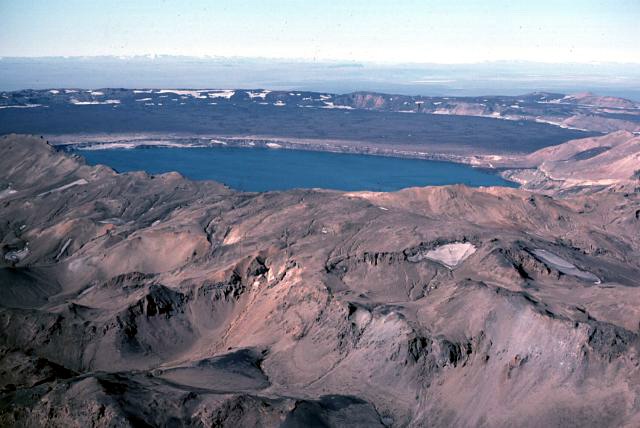
Photo: Michael Ryan, Public domain via Wikimedia Commons
A volcano that collapsed in on itself after an eruption in 1875. Since then, water has accumulated in the crater, making a 220 metre deep pool of water.
Askja ( ) is an active volcano situated in a remote part of the central highlands of Iceland. The name Askja refers to a complex of nested calderas within the surrounding Dyngjufjöll mountains, which rise to 1,514 m (4,967 ft), askja meaning box or caldera in Icelandic.
© OpenStreetMap contributors
This tuya, surrounded by a lava field, was not ascended until 1908. At a height of 1700 m it is known as "the Queen of Icelandic Mountains" and was added to Vatnajökull National Park in 2019.
Further inland, along the glacial river that once shaped Ásbyrgi are the canyons through which the mighty river still flows. Among the sights in the area is Dettifoss, the most powerful waterfall in Iceland. Previously a national park of their own, Jökulsárgljúfur are today a part of the Vatnajökull National Park.
Iceland's highest waterfall with a drop of over 240 metres.
A canyon of winding rivers, covered in lush moss and dramatic cliffs.