//

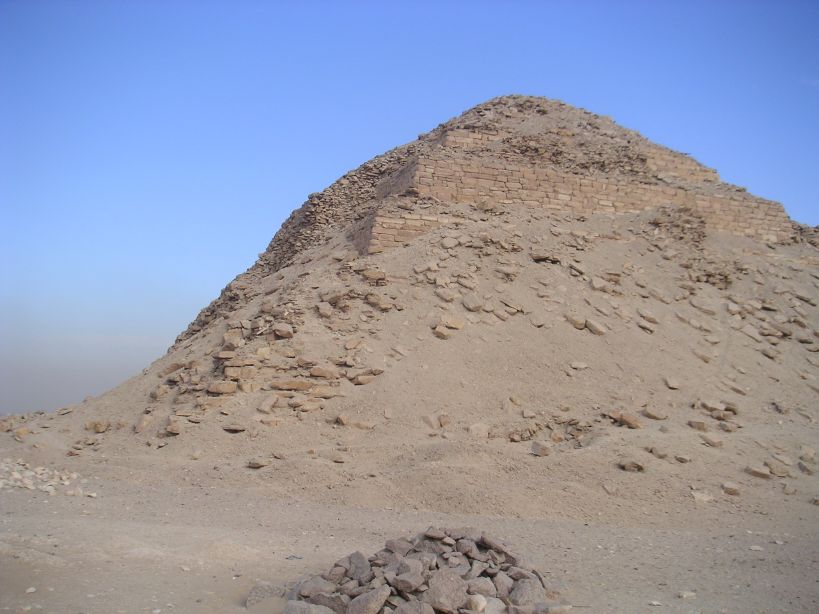
Photo: No machine-readable author provided. Neithsabes assumed (based on copyright claims)., Public domain via Wikimedia Commons
Standing 45 m now in a partially ruined state, the Pyramids of Neferirkare closely resembles the Step Pyramid of Djoser at Saqqara, unintentionally, as the steps visible in its construction were designed to be filled in to achieve the classic pyramid shape. This task was never completed.
The pyramid of Neferirkare is the funerary monument built for the Egyptian pharaoh Neferirkare Kakai of the Fifth Dynasty in the 25th century BC. It is the tallest, highest-situated structure in the Abusir necropolis – located between Giza and Saqqara – over which it still towers. The Fifth Dynasty marked the end of the great pyramid constructions that had prevailed during the Fourth Dynasty. Pyramids of the era were smaller and the complexes followed a standardized template, though this coincided with the proliferation of intricate relief decoration.
© OpenStreetMap contributors
Queen Khentkaus II, wife of Neferirkare and mother of Neferefre and Niuserre.
Easily the most ruinous of the 'complete' pyramids at Abusir. Nyuserre was the son of pharaoh Neferirkare and usurped the causeway of his father's mortuary temple for his own monument - it can be seen to the southeast of the pyramid. Nyuserre's monument encompass a main pyramid, a mortuary temple adjacent the east face, a valley temple on Abusir Lake, the accompanying causeway intended for Neferirkare's monument, and a cult pyramid. The main pyramid had a stepped core built from roughly cut limestone encased in fine Tura limestone. The limestone casing was stripped by stone thieves, leaving the core exposed to the elements and further human activity, reducing the once nearly 52 m tall pyramid to a ruined mound, with a substructure that is dangerous to enter due to the risk of cave-ins.
— The pyramid belonged to a woman, likely a queen. The name of the vizier Ptahshepses appears among builders' marks, which dates the pyramid to the time of Pharaoh Nyuserre.
Likely the pyramid of a queen from the Fifth dynasty
Ptahshepses, vizier under Nyuserre.