//


Costa Rica
Photo: DonMezzi, Public domain via Wikimedia Commons
The Central Pacific region of Costa Rica has spectacular coastlines and jungle landscapes, yet most of it is sparsely populated and often ignored by foreign tourists, making it an ideal destination for travelers who value seclusion and natural experiences.
The southern half of the peninsula is in the Central Pacific region, while the northern half is in Guanacaste Province.
From the travel guide. Select a place for details, a map and what is nearby.
Puente Río Tarcoles
This is a favorite spot for crocodiles that come here to warm up before hunting at night. You will normally be able to see at least 30 crocodiles here. The reptiles pose no threat (unless you plan to jump down to them), but you should pay attention to the traffic, especially when you cross the road to see the crocodiles on the other side. The 400 m long bridge is about 15 m off the ground. The bridge is missing some of higher guards rails so take care not to lean on them. The side walk is only 1 person wide. The bridge is long and straight so you will see the traffic and they will see you. The crocodiles sun themselves on the various sand bars in the middle of the river. They are long and fat. It is sad to see the garbage, used tires, plastic, in the river containing such magnificent creatures.
By plane
All major airlines fly into the capital. From there you can catch a puddle-jumper.
By (rental) car
You can also rent a car. The roads are not well marked and very curvy and winding with steep cliffs at times.
By bus
There are two types of buses, the express or the collectivo—they cost the same amount.
By taxi
Taxis are available, e.g. between Quepos and Manuel Antonio. They will sometimes try to charge tourists more, but if you know what to expect they will be reasonable.
Choose an airport to see hotels, stations, taxi ranks and car rental desks around it.
San José (Alajuela) · International · SJO
Loading places around the airport…

Quepos is a small town in Costa Rica near the Manuel Antonio National Park. It is the closest town offering full tourist services, but has lost much of its charm and innocence due to overdevelopment as it became the poster child destination of the eco-tourism crowd.

Manuel Antonio is one of the most popular tourist destinations in Costa Rica due to its beautiful beaches and rich wildlife. It is in the Central Pacific region the country.

Montezuma is a town near the southern tip of the Nicoya Peninsula on the Central Pacific coast of Costa Rica.

Jacó is one of the two largest tourist towns on the Central Pacific Coast of Costa Rica. It is a surfing town with a 4-km long black sand beach and several local surf shops where you can get a board or sign up for lessons.

Esterillos' is a beach town in the Central Pacific region of Costa Rica.

Playa Hermosa de Jaco is a small surfing village just south of Jaco, in the Central Pacific region of Costa Rica. Known for consistent wave break throughout the year, it is one of Costa Rica's largest and most famous beaches.

Pochote is an isolated village in Costa Rica, that some consider a "ghost town". Located across the Gulfo de Nicoya on the tip of the Nicoya Peninsula, Pochote nonetheless offers unparalelled sightseeing and attractions.

Malpaís is a town in Costa Rica's Central Pacific. Located along a dusty road southwest of Cóbano, it is one of the country's premier surfing spots along with the neighboring community of Santa Teresa.

Puntarenas is a port city on Costa Rica's Central Pacific Coast.
Santa Elena is a village in Costa Rica on the border between the provinces of Puntarenas and Alajuela. It is a popular base camp for eco travelers and backpackers because it lies next to some spectacular rainforests and rugged mountain hiking areas.

Carara National Park (Spanish: Parque Nacional Carara) is a national park on the mid-Pacific coast of Costa Rica, north of the city of Jacó. Carara is Indian and means river of lizards.

Monteverde and Santa Elena Cloud Forest Reserves are in the Central Pacific region of Costa Rica.

Manuel Antonio National Park (Spanish: Parque Nacional Manuel Antonio) is a national park in the Central Pacific region of Costa Rica in the municipality of Manuel Antonio, 7 km (4.3 mi) south of Quepos.
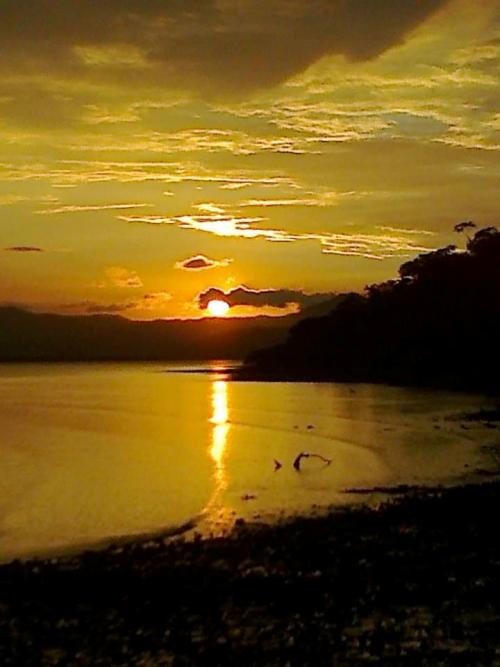
Chira Island is a district of the Puntarenas canton, in the Puntarenas province of Costa Rica.

San Lucas Island National Park is a former prison island in the Gulf of Nicoya on the Central Pacific coast of Costa Rica. Visitors can see the former prison facilities including cells where notorious criminals were once imprisoned.
Articles and travel topics about Central Pacific and Costa Rica.
 Travel tips
Find the best time to visit Costa Rica in 2026. Compare dry season sunshine, green season wildlife, rainforest hiking, hotel rates, and surf swells.
8 min read
 Inspiration
The best places to visit in December across sun, snow and culture, comparing Lapland, Chiang Mai, Vienna, Costa Rica and Cape Town.
7 min read


 Nature & adventure
Five places to sleep close to nature, from Tuscan farmhouses to cloud-forest lodges and fjord cabins, with prices and booking tips.
6 min read

 Itineraries
The Oregon Trail is a 2,200 mi (3,500 km) National Historic Trail across the United States, traditionally beginning in Independence, Missouri and crossing the states of Nebraska, Wyoming, and Idaho before ending near…
Wikivoyage
Every section of the guide. Open one to read it in full.