//

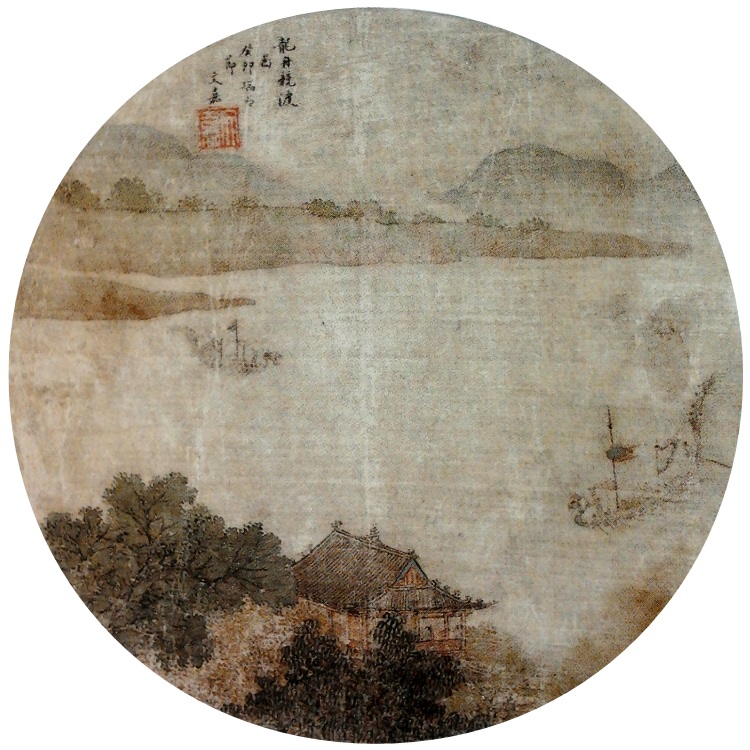
Photo: After Wen Jia, Public domain via Wikimedia Commons
The famous Dragon Boat Festival is celebrated throughout China however, its origins lie with the ancient Chu Kingdom that resided in Hubei Province and surrounding provinces during the Warring States Period. The festival was brought about from the story of Qu Yuan, advisor of King Huai, who had made many predictions about the dangers of the surrounding kingdoms to their own. Qu Yuan had advised the king on ways to protect the Chu Kingdom, but the king refused to listen and instead banished his advisor from the court. Years later, when word reached Qu Yuan that all of his predictions had come true, he committed suicide in the river out of despair over the fall of his kingdom. It is said that the people of the town loved him so much that they paddled down the river in dragon boats making music and throwing rice into the river so that the fish would not eat his body. This event is believed to have occurred on the 5th day of the 5th lunar month, and the festival is celebrated in much the same way today as the event had occurred with the dragon boats and music in the river. People eat zongi, special rice wrapped in bamboo leaves, on this holiday. Although Qu Yuan is said to have drown himself in the Miluo River, just outside of Hubei Province, the festival is believed to have originated in Wuhan.
Throughout the rest of the year, one can often see teams of dragon boat paddlers exercising on the city's lakes and rivers. For one of the sites, see Chuidi Scenic Area in the "See" section.
The Dragon Boat Festival, also known as the Duanwu Festival or Tuen Ng Festival, is a traditional Chinese holiday that occurs on the fifth day of the fifth month of the Chinese calendar, which corresponds to late May or early June in the Gregorian calendar. The holiday commemorates Qu Yuan who was the beloved prime minister of the southern Chinese state of Chu during the Warring States period, about 600 B.C. to 200 B.C., and is celebrated by holding dragon boat races and eating sticky rice dumplings called zongzi, which were southern Chinese traditions. The Dragon Boat Festival integrates praying for good luck and taking respite from the summer heat.
梨园公园, 梨园 Li Garden
One of the oldest and most accessible parks on the East Lake, all summer long it is a popular swimming area for the youths and families alike. Elsewhere on the lake, there are fancier beaches where admission is charged.
湖北美术馆
湖北省博物馆
Exhibit of ancient Chinese artifacts excavated from throughout Hubei Province. Displays range from pottery, jewelry, clothing, and even ancient human skulls. One of the highlights are the well-preserved musical instruments, and a brief concert is played daily on replica instruments. Also houses one very famous weapon: the Sword of Goujian. The museum is a very popular destination, and ticket quotas will run out very quickly after released.
东湖毛泽东故居
The East Lake is home to another one of Chairman Mao's villas. He returned here annually and typically stayed a few months. The decor was designed in the 1950s fashion, which strikes many visitors as odd, yet there are plenty of indicators that it is no ordinary person's home. One of the most interesting sites is Mao's large indoor swimming pool. Mao's pool seems to no longer be accessible. Also, the villa is not where Google Maps says it is, and it is difficult to find since there are no signs (not even in Chinese). To get there, get to Hubei Museum first. As you face the museum main entrance, turn left and walk along the main street. Immediately a street will branch off to your right - take it (the museum will be on your right). The street will lead to a roundabout, on which you should turn right, into a narrow shaded alleyway with some dilapidated houses and chicken coops. Eventually you will come to a gate (may look closed but will have an opening). Continue through the gate and straight along a causeway with water on both sides. You will get to an intersection - turn left. You will come to a parking lot in front of a large building complex - you want to get behind that complex, i.e. pass it so that it's on your left (there's a road with a blue forward-pointing arrow going there - take that road, then turn left). You will see an unremarkable-looking building with Mao's old car in a glass enclosure - this is Mao's villa.
水生生物博物馆, Museum of Aquatic Organisms
A museum attached to the Institute of Hydrobiology, a research institute run by the Chinese Academy of Sciences. The museum holds over 400,000 individual specimens, including some from extinct species such as the Yangtze River Dolphin. Visitors are required to make an appointment at least one day before visiting.
武汉大学 Wuhan Daxue, Wuda
If you are in Wuhan in the spring, be sure to check out the cherry blossom (sakura) in Wuhan University, a famous tourist attraction. Any time of the year, you can also take a tour among the palatial buildings in "one of the most beautiful campuses." Unlike most other universities in China, Wuhan University can be visited without making an appointment. The university dropped its reservation requirement in May 2026. Just remember to bring your passport or other form of ID.