//

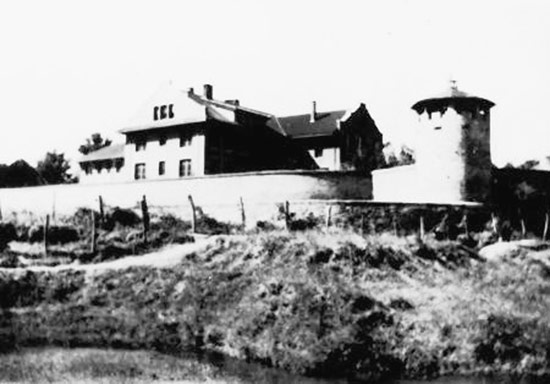
Photo: Unknown authorUnknown author, Public domain via Wikimedia Commons
A World War II-era concentration camp where thousands of Western prisoners of war, including Eric Liddell, who was portrayed in the movie Chariots of Fire, were interned during the Japanese occupation. This is an interesting and little-known site in Weifang. The names of the prisoners are written in Chinese on the monument, but their English names are on a plaque to the south.
The Weixian Internment Camp, better known historically as the Weihsien Internment Camp, was a Japanese-run internment camp called a "Civilian Assembly Center" in the former Wei County, located near the city of Weifang, Shandong, China. The compound was used by the Japanese during World War II to intern civilians of Allied countries living in North China. The camp operated from March 1943 until October 1945 and more than 2,200 civilians were interned for all or part of the time the camp was open.
© OpenStreetMap contributors
杨家埠风筝厂
Inside the museum and factory, you will witness traditional kite making and production in a traditional Chinese setting of small gardens, old buildings and a slower pace of life. It's a good idea to buy your own kite at one of the shops outside of the factory (along the road) as it is generally cheaper here than in the city or in the factory.
世界风筝都纪念广场
A nice place to witness old men playing traditional games of chess or cards or other games, buy a kite, or people watch, in the center of Weifang. It is a citizen activity square that integrates civil defense fortifications, commerce and shopping, leisure and entertainment and other functions, and highlights "environmental protection characteristics", "humanistic characteristics" and "kite cultural characteristics". The total area is about 9 hectares. The above-ground landscape of the square will include mascot avenue, central square, riverside landscape area, amphitheater and pier, Guomao terraced square, Siping Road exit square, Kite Museum entrance square, children's playground, botanical park, tree array and other ten major landscapes.
潍坊世界风筝博物馆
The museum is worth a look to glimpse kites from around the world and the brush up on your kite history.The museum is China's first large-scale professional kite museum. The architectural shape adopts the characteristics of Weifang's leading centipede kites. The roof is a complete combined dragon. It is designed to collect and display kite treasures and kite-related materials from ancient and modern times at home and abroad. The exhibition uses detailed kite information as well as photos, texts, paintings, replicas, etc. to comprehensively display the history, application, evolution, kite schools and the Weifang International Kite Festival.
潍坊市博物馆
A nice way to spend a bad weather afternoon.
十笏园博物馆
It is a classical garden full of history and cultural charm. The museum was built in the Ming Dynasty and is now a national key cultural relics protection unit. The layout of the garden is exquisite and the collection is rich, with calligraphy, painting, ceramics, jade and other cultural relics, showing the history, culture and artistic achievements of the Weifang area. Visitors can enjoy the essence of ancient art and feel the elegant atmosphere of the traditional garden, which is an excellent place to understand the history and culture of Weifang.
Described as having not only the largest roller coaster in Shandong, but all of mainland China, the amusement park is a fun way to spend a day