//

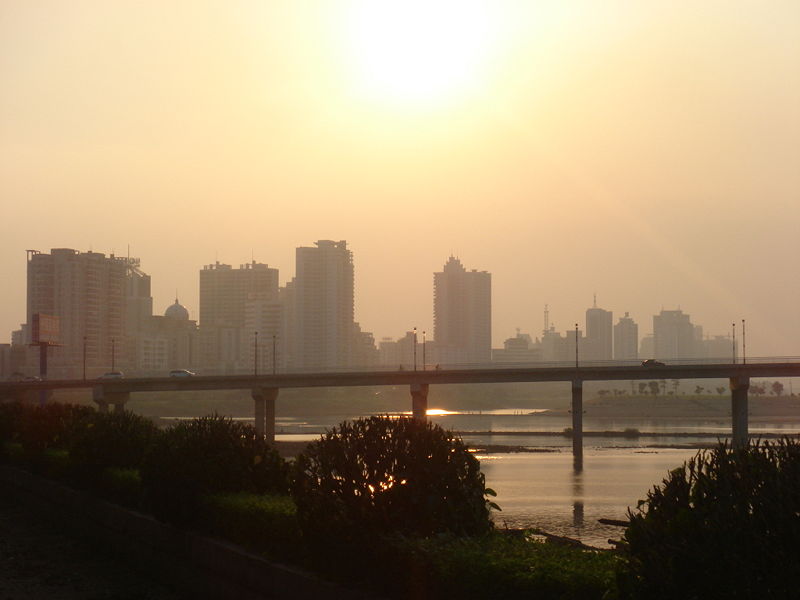
Photo: User:Alex Liu, User:Feelmore, Copyrighted free use via Wikimedia Commons
Visit Qingyuan Museum to learn about the history and culture of Qingyuan through archaeological remains, historical objects, ceramics, calligraphy and other local heritage. The museum also hosts temporary exhibitions, public lectures and educational activities.
Qingyuan, formerly romanized as Tsingyun, is a prefecture-level city in northern Guangdong province, China, on the banks of the Bei or North River. During the 2020 census, its total population was 3,969,473, out of whom 1,738,424 lived in the built-up area made of urbanized Qingcheng and Qingxin districts. The primary spoken language is Cantonese. Covering 19,015 km2 (7,342 sq mi), Qingyuan is Guangdong's largest prefecture-level division by land area, and it borders Guangzhou and Foshan to the south, Shaoguan to the east and northeast, Zhaoqing to the south and southwest, and Hunan province and Guangxi Zhuang Autonomous Region to the north. The urban core is surrounded by mountainous areas but is directly connected with Guangzhou and the Pearl River Delta by Highway 107.
© OpenStreetMap contributors
太和古洞; Taihe Ancient Cave Scenic Area
A cave and mountain scenic area in Taihe Town, suitable for visitors interested in caves, mountain scenery and walking.
飞来寺; Feilai Si
A historic Buddhist temple on the bank of the Beijiang River. The temple was founded in 520 and is one of Qingyuan's most important historic religious sites.
黄腾峡; Huangtengxia
A mountain gorge known especially for rafting and other outdoor activities. The area also has cable cars, a mountain luge and a treetop walk.
飞霞风景区; Feixia Scenic Area
A scenic area along the Beijiang River, with mountains, river scenery and historic religious sites.
古龙峡; Gulongxia
A major outdoor attraction with a gorge, waterfalls, glass viewing platforms and rafting. The scenic area is a national 4A tourist attraction and a national sports tourism demonstration base.
古龙峡漂流
A natural-water rafting course 6,063 m long with a vertical drop of 378 m.