//


Autonomous region of China
Photo: No machine-readable author provided. Fanghong assumed (based on copyright claims)., CC BY-SA 3.0 via Wikimedia Commons
Guangxi (广西; Gwóngsāi in Cantonese, Guǎngxī in Mandarin) is a relatively poor but highly scenic area in southern China. It is known as the Guangxi Zhuang Autonomous Region, because of its large Zhuang minority population.
North Guangxi is in Guangxi Province.
Central Guangxi is in Guangxi Province.
South Guangxi is in Guangxi Province.
Guangxi has a special visa exemption scheme for citizens of ASEAN countries, who may visit Guilin, Yangshuo and Longsheng for up to 144 hours (6 days) without a visa provided they join an approved group tour, enter and…
Read in the guideChoose an airport to see hotels, stations, taxi ranks and car rental desks around it.
Nanning (Jiangnan) · International · NNG
Loading places around the airport…

Nanning (南宁; Nánníng) is the capital of Guangxi Zhuang Autonomous Region in south-west China. It is a large, modern city and a transport gateway for travellers to and from Vietnam.
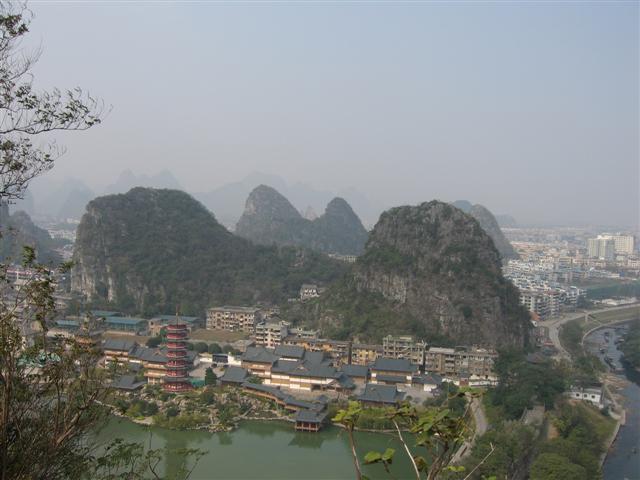
Guilin (桂林; Guìlín) and the surrounding region are among the most scenic areas in China and the most popular tourist destinations both for Chinese travellers and the international backpacker set. Guilin is the hub for trips to the surrounding area's karst terrain, limestone mountains eroded into fantastic shapes.

Yangshuo (阳朔; Yáng shuò) is a small town surrounded by karst mountains and beautiful scenery near Guilin. It has been a popular backpacker destination since the 1980s, and the surrounding area has excellent rock climbing opportunities which attract large groups of tourists.
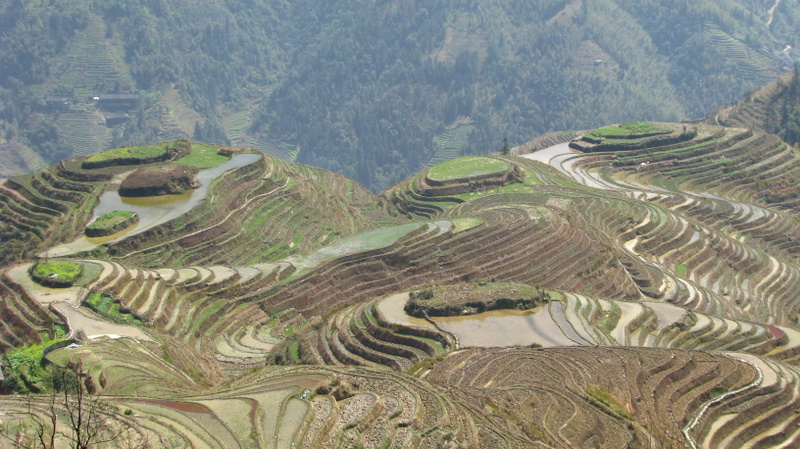
Longsheng (龙胜; Lóngshèng) and nearby Longji terraces (龙脊梯田; Lóngjǐtītián) are in North Guangxi, near Guilin. The Longji rice terraces area is famous for the large number of terraced rice paddy fields on its mountain, which have created an intricate pattern on the hillsides.
Beihai (北海; Běihǎi) is a city with an urban population of 570,000 (2010) in Guangxi on the southwest coast of China. It is said to be the fastest growing city in the world.

Guiping (桂平) is a small city in Central Guangxi. It is administratively part of the prefecture city of Guigang.

Liuzhou (柳州; Liǔzhōu) is the second largest city in Guangxi. It is an industrial city, but most of the industry has moved from the city centre and the city is much less polluted than it used to be.
₧ Chongzuo (崇左 Chóngzuǒ) is in the southwest of Guangxi Zhuang Autonomous Region, adjacent to Vietnam. It is one of the important gateway cities facing ASEAN. Chongzuo is famous for its unique karst landscape, with De Tian Transnational Falls, Friendship Pass and Stone Scenic Forest.
Detian (德天; Détiān) is a village in Central Guangxi, China.

Chengyang (程阳 Chéngyáng) is a group of villages 18km from Sanjiang, in the Guangxi province of China.

Xingping (兴坪) is a town in North Guangxi, China. It is on the Li River, about 27 km upstream from Yangshuo and 60 km downstream from Guilin.

Weizhou (涠洲岛 Wéizhōu Dǎo) is China's biggest and youngest volcanic island. It lies 39 km south of Beihai city in the Gulf of Tonkin, an arm of the South China Sea.
Articles and travel topics about Guangxi and China.
 Travel tips
Who can visit China visa-free in 2026: the 30-day list (now including the UK and Canada), the 240-hour transit rule, and how to set up mobile payments.
7 min read
 Travel tips
Find out how much does a trip to China cost in 2026. Compare realistic daily budgets for bullet trains, hotels, dining, mobile payments, and top sights.
9 min read
 Inspiration
Celebrate Chinese New Year 2027 with festival dates, temple blessings, lantern displays, and top party spots across Singapore, Penang, and Taipei.
7 min read


 Travel tips
Compare travel eSIMs for international trips in 2026. Review Airalo, Ubigi, Nomad, and Holafly for coverage in Europe, Japan, and China.
7 min read


Every section of the guide. Open one to read it in full.