//

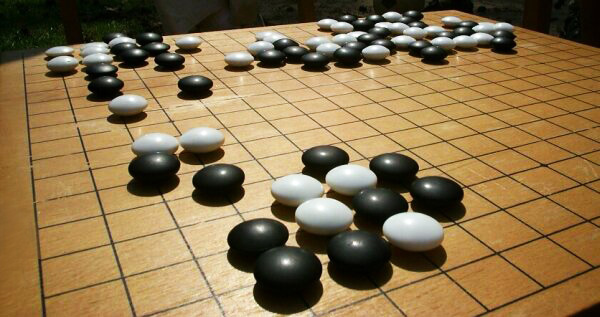
Photo: Donarreiskoffer, CC BY-SA 3.0 via Wikimedia Commons
As a symbol of Chinese culture, Weiqi is one of the world’s great strategy games where a few simple rules lead to limitless possibilities. Weiqi is hugely popular in Chengdu to the point where it has been nicknamed Weiqi City. Chengdu Weiqi Classroom is the only place where foreigners can study this game with English speaking assistance.
Go, weiqi, or baduk is an abstract strategy board game for two players in which the aim is to fence off more territory than the opponent. The game was invented in China more than 2,500 years ago and is believed to be the oldest board game continuously played to the present day. A 2016 survey by the International Go Federation's 75 member nations found that there are over 46 million people worldwide who know how to play Go, and over 20 million current players, the majority of whom live in East Asia.
锦里古街 (jǐn lǐ gǔ jiē)
This neighborhood is part of the old city of Chengdu; it features hotels and small stores built in an old-fashioned style. Antiques are sold in a variety of different stores. It is very popular among both tourists and locals, especially at night, with many bars, restaurants, and nightclubs. You will find a lot of famous local snack food over there, prices ¥1-10. Restaurants and bars in Jin Li are more expensive than outside. There are also antique hotels in there. Some consider Jin Li is to be tourist trap, which is partly true. However, this 'new old street' offers regional and fairly affordable street food specialties as well and can be combined with a visit to the Wuhouci Temple (entry fee ¥60, unless you are the holder of a Panda Card). Don't forget to take your camera.
宽窄巷子
Very nice place with lots of (expensive) tea houses, restaurants and local snacks. Great for relaxing. Streets date from late Qing-dynasty style but have been rebuilt. Free government Wi-Fi in this place.
天府广场 (tiān fǔ guǎng chǎng)
This square, overlooked by an enormous Chairman Mao statue in the center of the city, has been spruced up. Every evening at dusk, as well as at noontime, an elaborate water show, synchronized to music, bursts out from the square's fountains. Below the square is the hub of Chengdu's subway system. In the subway entrance plaza, a small shopping mall has been built, almost literally under Mao's nose.
千高原艺术空间; Qian Gaoyuan Yishu Kongjian
A contemporary art gallery in Chengdu exhibiting Chinese and international artists. Exhibit openings generally happen once a month, and other events also take place.
四川美术馆 (sì chuān měi shù guǎn)
Sichuan Art Museum is a major contemporary art institution located in the heart of Chengdu’s Qingyang District near Tianfu Square in Sichuan Province, China. The museum’s modern building rises six stories and houses a large collection of Chinese paintings, prints, and artworks, including traditional and modern pieces. It also serves as the headquarters of the Sichuan Artists Association and is part of Chengdu’s vibrant cultural zone alongside other museums and galleries.
成都自然博物馆
One of the largest natural history museums in western China. The museum has around 70,000 items, of which around 10,000 are on display, including many fossils. As of November, visitor numbers are limited to 5000 people per day and bookings are essential. Bookings can be made on the museum's public WeChat account. The WeChat account name is "成都自然博物馆 成都理工博物馆".