//

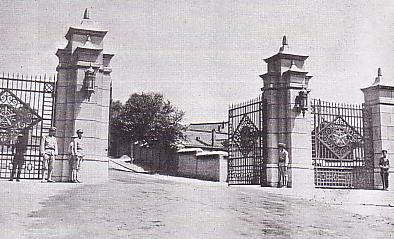
Photo: Unknown authorUnknown author, Public domain via Wikimedia Commons
Home of Puyi, the last emperor of China and puppet emperor of Manchukuo, and centre of the Manchukuo administration at the time. Signage is available in English (and Japanese) although many of the artifact descriptions are in Chinese only. There is an audio tour rental fee of ¥40 although the recordings do not add much to what is already provided by the signage (¥100 deposit for equipment). English tour guides are available for ¥240. The grounds are nicely restored, since the site was repurposed as a factory during the Cultural Revolution. Scenes from the acclaimed 1987 film The Last Emperor were filmed here.
The Museum of the Imperial Palace of "Manchukuo" is a museum in the northeastern corner of Changchun, Jilin province, northeast China. The palace was the official residence created by the Imperial Japanese Army for the last emperor of China, Puyi, to live in as part of his role as emperor of the Japanese puppet state of Manchukuo. The museum currently uses either Palace Museum of the Manchurian Regime or Palace Museum of the Puppet Manchukuo as its official English name for external use. It is classified as a AAAAA scenic area by the China National Tourism Administration.
© OpenStreetMap contributors
长春文庙
Built in 1872, the temple is now a museum. Hence it is also known as the Changchun Confucius Temple Museum (长春文庙博物馆).
胜利公园
The park offers activities such as a petting zoo and bumper cars (summer) and a frozen pond for skating (winter).
般若寺, 护国般若寺
Changchun's most important Buddhist temple. The Jilin Province Buddhist Association has its headquarters here. The temple is particularly active during Chinese New Year when the faithful flock to receive the Buddha's blessings.
人民广场; Rénmín Guǎngchǎng
In the Chaoyang District around the cross streets of Xi'an Lu (西安路), Renmin Dajie (人民大街), and Changchun Dajie (长春大街). It is one of the focal points of Changchun. It is close to Baishan Park (白山公园), and a mini "Culture Square" of sorts. The site commemorates the Russian soldiers, and specifically Russian pilots that died to liberate Changchun during World War II.