//


Island of Cape Verde
Photo: Aldo Bien, CC BY-SA 3.0 via Wikimedia Commons
Fogo (Eng.: "fire") is one of the Cape Verde Islands in the Atlantic. It lies east of the islands Brava and west of Santiago. The Pico do Fogo is with 2,829 m the second highest mountain in the Atlantic and dominates the island, which has a diameter of about 26 km. The seabed here is about -5,300 m, making the cone then measuring approximately 8,100 meters from base to peak. The cone rises about 1,000 m above the valley of a former volcano called Chã de Caldeiras. On the flank of Pico do Fogo, the last active Pico Pequeno has risen in eruptions of 1995 and 2014/2015. The Caldeira, framed by the Bordeira and dominated by Pico do Fogo forms a worldwide unique volcanic ensemble.
From the travel guide. Select a place for details, a map and what is nearby.
The valley formed by a previous volcano long time ago. This valley also serves as the starting point for some of the hikes described in the Do section.
Cloud forest with lush vegetation. Here is some agriculture (bananas, coffee, papaya, beans, ...). The rest of the island is rather barren, but fruitful, case water for irrigation is available. The usual crops of this climate zone are grown.
Most famous hike of the island from the Chã das Caldeiras valley. With mountain guide only. Guides can be hired directly in São Filipe, through the tourism agencies in São Filipe or directly in the small village located in Chã das Caldeiras. Recommended time to start is at sunrise to avoid the daytime heat in the black stones and sands.
Two-day hike around the ridge of the Chã das Caldeiras valley. With tour guide only.
The island offers several other easier hikes, e.g. from the Chã das Caldeiras to Mosteiros. Different hiking maps are available from a German editor and in the museum in São Filipe.
Rock basin with metal ladders in the north of the island just west of the town São Jorge. Be careful of the sea urchins.
Swimming here can be dangerous due to strong currents. Locals have reported that people have gone missing. There seems to be a somewhat regular lifeguard on duty in the middle of the beach in the afternoons.
By plane
Regular flights to Fogo from Praia, landing at São Filipe Airport (Also Known as Fogo Airport), IATA code SFL. Ask for a seat on the right side of the plane for the best view of the volcano.
By ferry
There is a ferry from Praia to São Filipe and from Sao Filipe to Brava island.
By bus
Similar to other islands of Cape Verde, shared minibuses called Aluguers run between towns. Due to the low number of inhabitants, Aluguers may run more infrequent than on the other islands.
By rental car
There are some local car rental agencies available in Saõ Filipe. Most vehicles seem to be SUVs and off-road vehicles for around $7000 - $9000 per day.
On foot
Fogo is a rather small island. Some smaller distances like Chã de Caldeiras to Mosteiros are also possible by foot.
By bicycle
Should be possible in general, but some of the roads are still cobblestone roads. Verify whether the bicycle that you bring or hire (if any) is suitable.
Choose an airport to see hotels, stations, taxi ranks and car rental desks around it.
Praia · International · RAI
Loading places around the airport…
Articles and travel topics about Fogo and Cape Verde.
 Culture & history
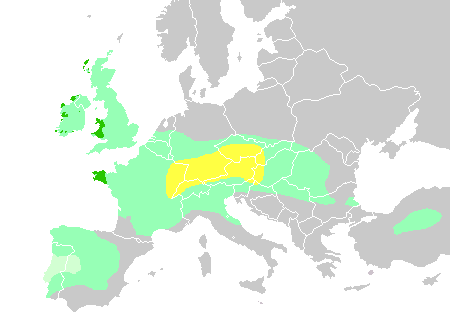
The Celts are a category of European peoples with a common ethnic, cultural and linguistic heritage. Many Celtic subgroups used to be adversaries of the Roman Empire, while others later embraced elements of Roman…
Wikivoyage
 Nature & adventure
As of 2023 the UNESCO World Network of Biosphere Reserves is made up of 738 reserves in 134 countries of which 22 are transboundary.
Wikivoyage
 Travel tips
Apart from making your way round the Caribbean or Polynesia by offering a hand on board yachts which seems to be common and easy, the most common route is the Atlantic crossing from Europe to the Americas (mostly to the…
Wikivoyage
 Itineraries
The Cape Route, the route around Africa, the Carreira da Índia or the European-Asian sea route, used to be among the world's most important routes of commerce.
Wikivoyage
Every section of the guide. Open one to read it in full.