//

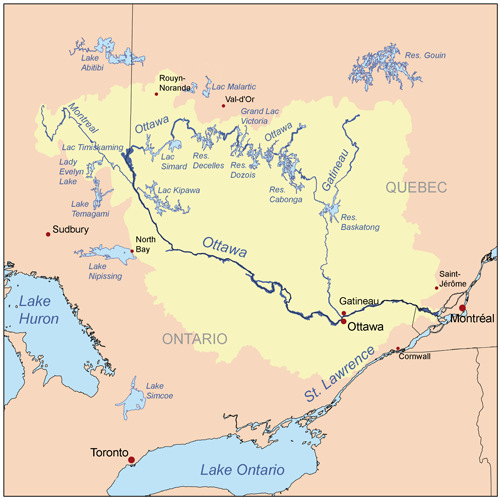
Photo: Kmusser, CC BY-SA 2.5 via Wikimedia Commons
The park protects one of the last stretches of the Ottawa River that has not been modified by flooding or dams for power generation. Accessing the park's islands requires a whitewater trip on the river. Some of the islands provide only informal wilderness trails that are not maintained or marked.
The Ottawa River is a river in the Canadian provinces of Ontario and Quebec. It is named after the Algonquin word "to trade", as it was the major trade route of Eastern Canada at the time. For most of its length, it defines the border between these two provinces. It is a major tributary of the St. Lawrence River and the longest river in Quebec.
© OpenStreetMap contributors
Seasonal (late May-September) historic museum. Displays and artefacts from the area's past, school house, log pioneer home and other period buildings.
Visitors on weekdays can view original 1867 jail cells in the basement, and the original courtroom, complete with a huge replica of the original brass light fixture. County meetings were held here for many years. Three hangings occurred at the indoor gallows inside the Courthouse, two in the 1870s and one in 1952.
Ten-acre horticultural garden with walking and cycling trails.
Housed in the original diesel room of the Pembroke Electric Light Co, a collection of original light fixtures and artefacts dates to the October 8, 1884 illumination of the very first street lights in Canada on Pembroke Street.
A 1½-km trail which follows the waterfront from the city's marina to Riverside Park. Includes outdoor theatre, historic "pointer boat" monument, outdoor chapel and lookout points.