//

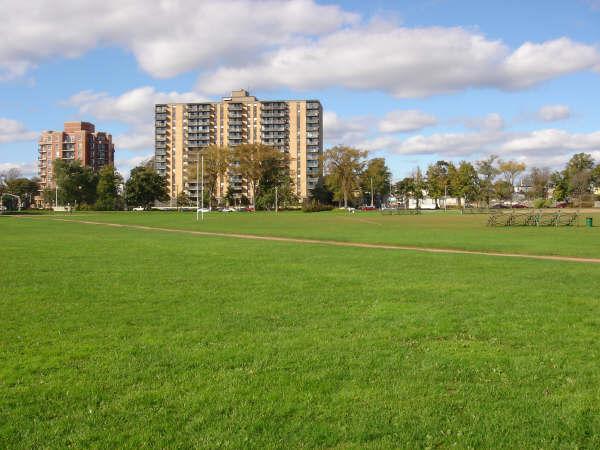
Photo: Sprocket, CC BY-SA 3.0 via Wikimedia Commons
A large public space open to everyone. In the summer, you can find residents and visitors playing sports, picnicking, and exercising. A permanent skating oval has been installed for public use.
The Halifax Common, in local popular usage often referred to as the Commons, is a Canadian urban park in Halifax, Nova Scotia. It is Canada’s oldest urban park.
© OpenStreetMap contributors
Home of Gus, the oldest known gopher tortoise.
Professional soccer. HFX Wanderers play as one of the founding members of the Canadian Premier League in a new stadium built near downtown.
An old fort on a hill overlooking the city and the harbour. The citadel is a national historic site and home to a museum and a small ceremonial garrison. A must-see, especially during Canada Day (1 July) celebrations. The museum is open only May-Oct, but the grounds are open all year around (for free in this case). The famous 'Noon-Gun' fires at noon every day of the year (except Christmas) as it has since the 1830s. Visitors are welcome to watch the firings at any point through the year.
A beautiful Victorian-era garden occupying a large city block. There are ponds, flowers, ducks, geese, and sometimes music in the gazebo.
This Quebec Major Junior Hockey League team plays from October to April at the Scotiabank Centre. Rough, highly-skilled games are combined with a near-NHL level of presentation. See Ice hockey in North America for context.
Historic St. Paul's on the Grand Parade
St. Paul's is the oldest building in Halifax and the oldest existing Protestant place of worship in Canada. Founded by proclamation of King George II in 1749, the building was erected in the summer of 1750. On September 2, 1750 the Reverend William Tutty held the first service inside what was, according to Mr. Tutty, "not completely fitted up". The architectural plans were based on St. Peter's Church, Vere Street, London which was designed in 1722 by James Gibbs, a pupil of Sir Christopher Wren. The resemblance between the two churches is remarkable despite the addition of St. Paul's vestibule and steeple, 1812, the side wings, 1868, and the chancel, 1872. The timbers of St. Paul's were cut in Saco, Maine and shipped to Halifax. Most of the materials including the bricks to line the walls were made locally. Over 2½ centuries later, the original wooden structure remains as sound as the day it was built. Charles Inglis, first overseas Bishop of the Church of England, arrived in 1787 making St. Paul's his cathedral. Until the construction of a garrison chapel in 1844, St. Paul's was also the first garrison church in Halifax.