//

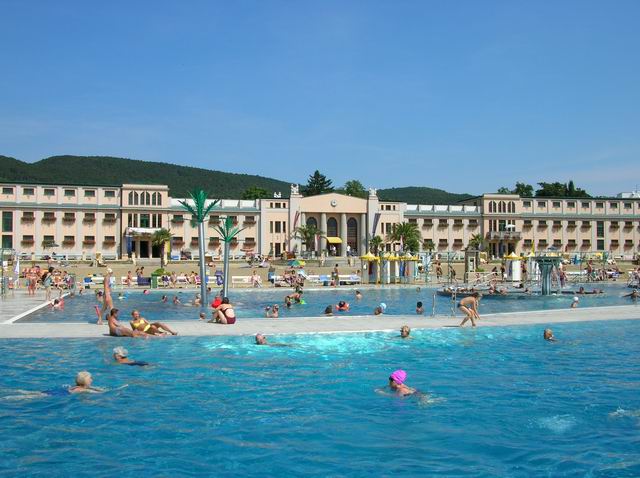
Photo: Deblu68, Public domain via Wikimedia Commons
In use since imperial days, this is one of the largest bathing facilities in Austria. It has an artificial sand beach, and offers the usual spa treatments as well as sporting facilities.
© OpenStreetMap contributors
Austria's largest rose garden with over 860 varieties, including specimens named 'Goldmarie' and 'Empress Elisabeth'. The roses bloom twice a year, in June and October.
Housed in the former city hall, this collection illustrates the history of Baden, from the Neolithic period through the Roman and Medieval periods to the 20th century. Particular attention is placed on the Biedermeier period, when the city was the summer destination of the imperial family as well as illustrious politicians and artists.
A Roman-style spa open year-round with hot springs and mineral waters.
Burgruine Rauheneck
Built in the 12th century, the castle was besieged and rebuilt multiple times throughout its history. The final assault was made by the Turks in 1529, after which it was not rebuilt. It has been open to the public since 1810.
Puppen und Spielzeugmuseum Baden
This annex building of the Biedermeier Attemsvilla houses a collection of over 1000 dolls and toys, from 1760-1950. Tours in German, English, and French are offered with prior arrangement.
Haus der Neunten
Beethoven spent the summers of 1821-1823 in this 16th-century house, and composed his 9th Symphony here. Five rooms are open to the public, and original writings, copies of his music, and numerous pictures document the composer's time in Baden. Also on display is a historic fortepiano.